Where should a porta potty go on a job site?
Pick flat, stable ground close to where people actually work, not tucked behind the trailer where nobody will bother walking. ADA Standards section 302.1 calls for stable, firm, slip resistant surfaces, so gravel pads or compacted soil beat loose sand or a slope. Keep units away from storm drains and low spots that pool water after rain, which matters on plenty of Toms River lots given how flat the ground runs near the bay. If you're placing an ADA accessible porta potty, you need a 60 inch turning circle per ADA Standards section 304.3.1, plus a route at least 36 inches wide under section 403.5.1 leading right up to the door. For construction crews sizing a whole layout, our how many porta potties do I need guide walks through headcount math, and OSHA 1926.51(c)(1) sets the baseline ratio at one toilet for 20 workers or fewer. Service access matters as much as worker access. Leave a clear path for the pump truck, and don't box units in against fences or dumpsters where a hose can't reach.
Can I place a porta potty in the street or right of way?
Placement in a public right of way needs confirming with the city before you set anything down. Toms River has its own process for what sits on a sidewalk, curb strip or road shoulder, and that isn't something to guess at. The same caution applies to dumpster placement permit cost questions. Rules and fees vary by location and by how long the container sits there, so check with the township before a roll-off dumpster rental lands on a street-facing spot. If you're pulling a permit for either unit, our dumpster permit requirements page covers what to ask the city, and porta potty permit requirements does the same for restrooms. When in doubt, keep the unit on private property, set back from the curb, and confirmed by whoever owns the lot. That solves most placement disputes before they start.
How much clearance does delivery need?
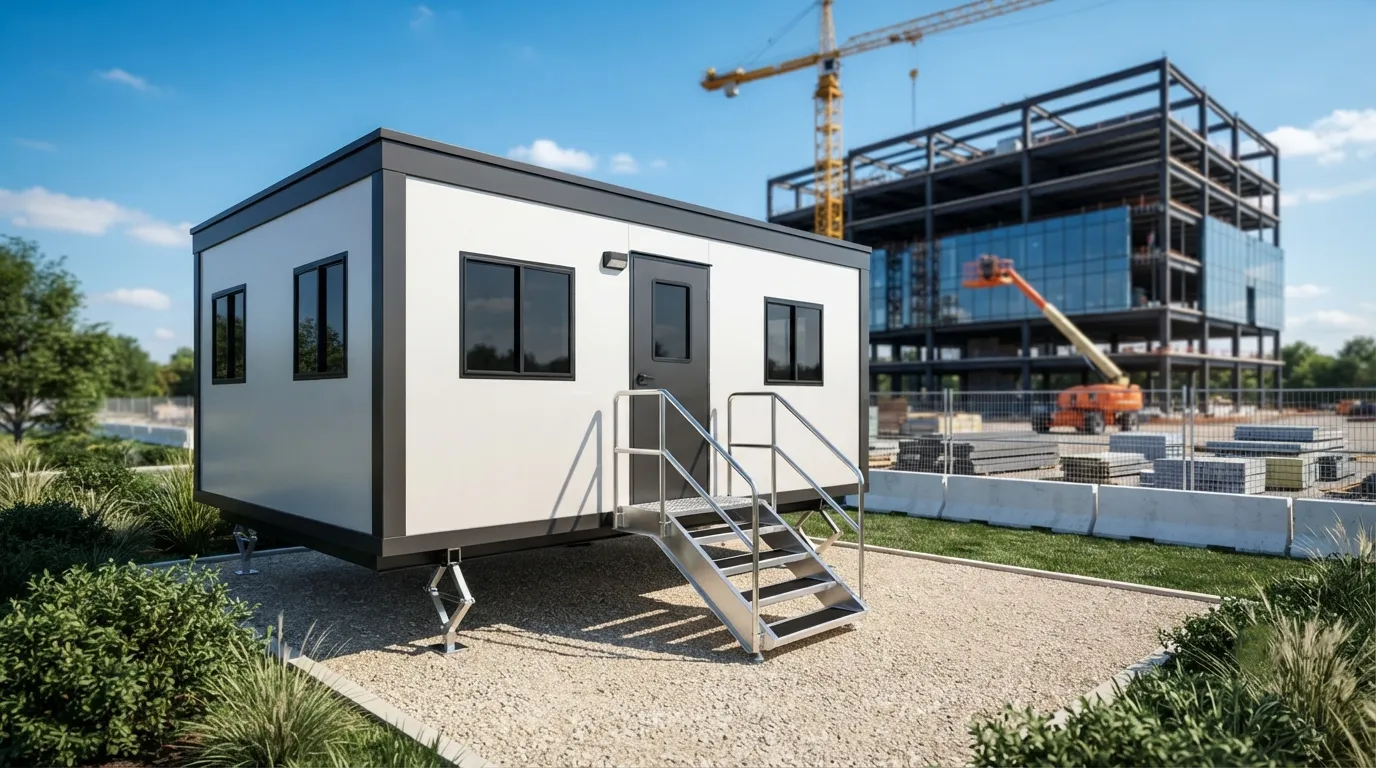
A roll-off delivery needs about 60 feet of straight clearance behind the truck, so a driveway with a tight turn or a dead-end alley can block delivery entirely. Measure that distance before you book a 10 yard dumpster rental or a larger box, since 60 feet is a hard number, not a guideline. Standard toilets need less room. A standard unit runs about 44 by 48 inches on the ground and stands roughly 92 inches tall, so most units clear a single-car driveway width with room to spare. Restroom trailers are a different story. A restroom trailer rental needs a level, hard surface plus space for leveling jacks and a step-free approach if guests will use it for a wedding or corporate event. Storage containers need similar planning. A 40ft storage container needs a straight shot for the delivery truck much like a roll-off, so measure gate widths and overhead lines before delivery day, not after the truck shows up in Toms River and can't turn around.
Does placement affect service and maintenance?
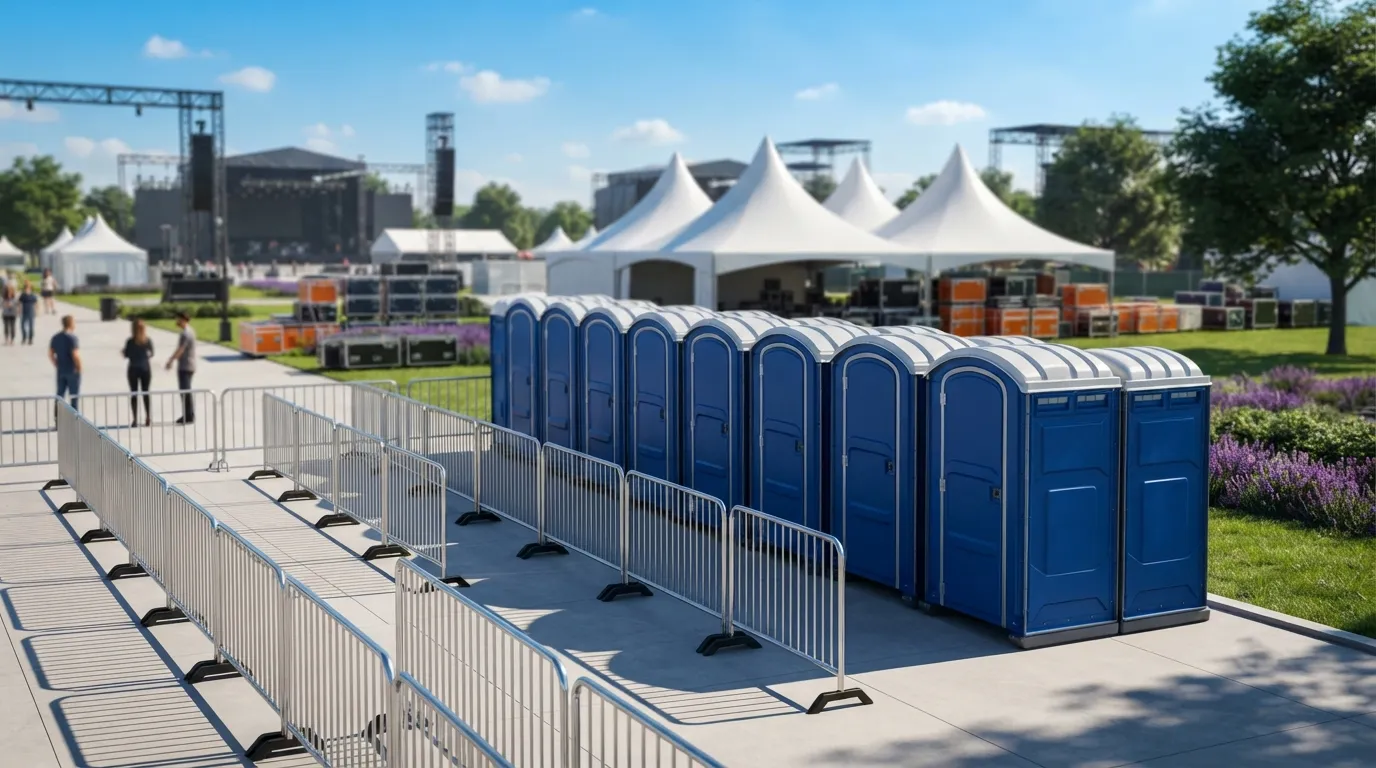
Yes, placement decides how fast a technician can service a unit and how often it needs attention. ANSI/PSAI Z4.3 sets one service visit per week for up to 10 users over a 40 hour week as the baseline interval, and a technician who has to walk 100 feet around a fenced yard every visit loses time on every stop. Keep the path clear and the gate unlocked on service day. The same logic applies to septic work: a placerville septic pumping service, or any septic pumping service crew here in Toms River, needs a hose run that reaches the tank without crossing a driveway or squeezing through a side yard. If you're running a handwashing station rental alongside your toilets, OSHA 1926.51(a)(1) requires an adequate supply of potable water at the site, and 29 CFR 1910.141(d)(2) requires soap and towels or a hand-drying device at the station, not just sanitizer. If your unit uses an ozark river portable sink replacement parts kit, keep the sink close enough to the work area that people actually use it. A portable sink rental placed too far from the crew gets skipped.
| unit | day | week | month |
|---|---|---|---|
| standard | 150 | 200 | 200 |
| ada | 230 | 185 | - |
| deluxe | 300 | 250 | - |
What if my site doesn't have flat ground?
Build a pad first. A few inches of compacted gravel over soft or sloped ground stops units from tipping and keeps the service truck from sinking. If the whole site is uneven, talk to us before delivery, since a standard porta potty rental can usually shift a few feet to find better footing.
How far from the work area should a unit sit?
Close enough that workers actually walk over. OSHA 1926.51(c)(1) sets the toilet ratio, but distance drives compliance in practice. Most Toms River sites keep units within 200 feet of the main work zone, similar to the field sanitation walk distance OSHA 1928.110 sets for agricultural crews.
Do I need a permit just to place a porta potty on my property?
Usually not on private property, but placement near a sidewalk, road or shared lot line can trigger local rules. Check our porta potty permit requirements page, and confirm anything right-of-way related directly with Toms River.
Can a mobile office trailer replace doors or panels for tighter site access?
Some units allow mobile office trailer replacement doors when a standard door won't clear a gate or fence line. Ask about door swing and clearance before delivery. A mobile office trailer rental with the wrong door style can block placement entirely on a tight lot.
Does winter change where I should place a unit?
Yes, ice and frozen ground change footing and service access. Our porta potty in winter guide covers pad prep and tank additives so units near Toms River don't freeze solid before the next scheduled pump-out.
Next step
Get a delivery date
Tell us the address, the dates and the headcount. We size the order and confirm the route.